Enough

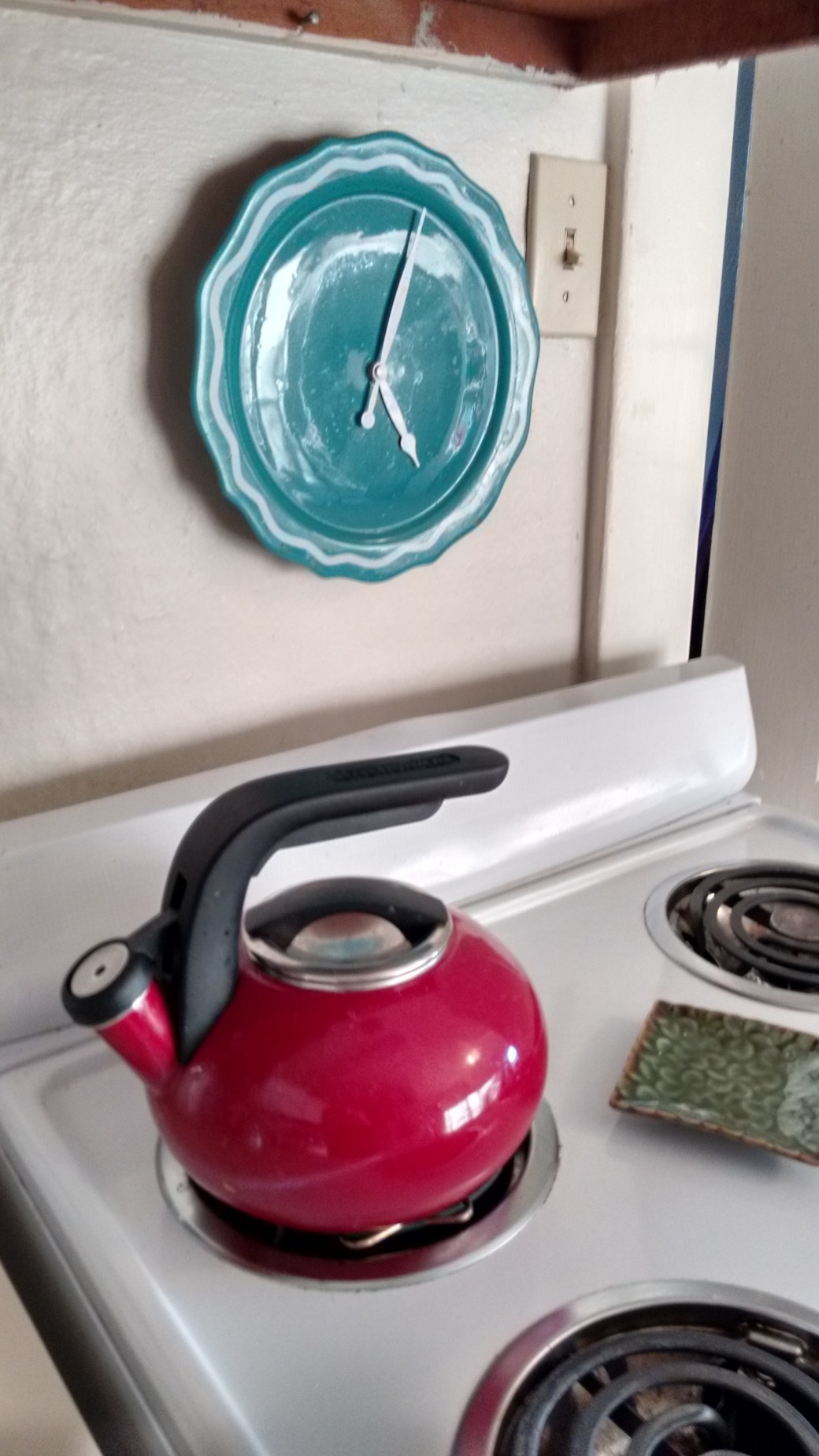
What I love about a cloudy morning is the way curls of steam rise like little white blossoms from the mug.

And how, when the wind blows up here on the third floor, the panes rock back and forth like a clumsy attempt to soothe all the stress and discouragement I’ve closed in.

I love how the world holds me like a blanket just long enough to feel that it’s OK to spend five extra Friday minutes staring out the window at the just-budding branches. Then suddenly, a few bright rays break through, land on my forehead like a brisk blessing, and it’s time to get back to work.

For several weeks I have felt at-odds with my desires, recognizing envy, discouragement, and selfishness in some vulnerable places. I cling to the words:

“You can’t have community with those you compete with,”

and

“We don’t need more things. We need more meaning.”

Unfurling from these two truths is a single word like a wisp of morning steam.

Enough.

I walk through my house fingering it like a stone in my pocket.

This house-it is enough.

These daily tasks-enough.

This messy kitchen, this sticking door, the contents of these closets–enough, more than enough.

And the uncertain dreams? the middle spots with unknown endings? the relationships sometimes causing so much thought? Enormously, abundantly enough-if I choose to accept them.

Sometimes it seems the whole of life is remembering. I remind myself of these words last November, how this is the beginning of the fullest life, the biggest blessing: choosing to name this enough. I remind myself of what we read last December, what I struggled against like a cord wrapped tightly–“Embrace the small.” Embrace the downward life, because this is the way of the Kingdom.

What feels like compromise or constraint can turn out to be the greatest blessing.

What feels like “settling” can be the jar of clay with the treasure inside.

What seems insignificant  can be a gateway to glory.

What seems boring and ordinary may just be the very tool for a job this size.

“The meaning unfolds in the ordinary Wow. Thank You. Yes.”

Ann Voskamp

Why Good?

I wake this morning to a flood of February sunshine through the window.

2016-02-15

Later, my phone will announce the astonishing news–10 degrees warmer today than yesterday. But for now, I simply slide my legs to a cool patch of the forest green sheets from our wedding shower. I curl my arms up to the pillow which has teased my hair into a mass of wild loop-de-loops all night. Outside the bedroom door, Ben makes coffee and scrolls through email under a bright-colored quilt with a view of the city skyline. My heart wants to burst.

Later, he’ll make me earl grey–my favorite way, with honey and cream–and I’ll sit on our IKEA couch that we wrestled together with our own hands, and eat bananas with nutella toast, just like the day so long ago when we first realized we belonged together.

2016-02-15 (1)2016-02-15 (3)2016-02-15 (2)

The cup feels heavy in my hand. Who can explain this?

So much of the world feels under siege– full of anger, violence, pain, defensiveness, hopelessness, emptiness, downright evil-ness. Who can explain the peace of a sunny morning, the joy of a day full of promise? In a world where so much has gone wrong, who can explain the astonishing ways in which they go right?

The flash of utter gratitude feels like a fire inside, feels the way the sunshine warms my toes through the open window. I can hear the truth of it echo all the way down my spine.

If we truly believe in a broken world, it’s not the pain and failures that should undo us.

If we truly believe we were hopeless without a Savior, it’s not the evil and suffering that should derail us.

Pain, failure, evil–our souls were never created to make sense of it all. The weight of this world can feel crushing, life-sucking, and I’ll be the first to admit it rather than downplay another’s suffering. Yet I can’t help but wonder why I’ve ever been surprised by pain and evil.

2016-02-15 (5)2016-02-15 (4)IMG_20150613_211417575_HDRIMG_20150530_134547454IMG_20150523_121928331_HDR

Instead, as I walk up the slate-grey steps and slide into a pew, I’m astounded by good.

I’m overwhelmed that amidst this very broken, self-destructing world–this human race who has collectively denounced our dependence on anything but ourselves–that here I can still find the very presence of God. What overwhelming mercy from one who “causes his sun to rise on the evil and the good, and sends rain on the righteous and the unrighteous.” What love from one who breathes life into my lungs and whispers to the daffodils when to bloom. What faithfulness from one who still pulls the tide back and plants seeds of love and eternity in the self-seeking hearts of mankind.

The world would tell us to expect good, reach for the best, see suffering and pain as interrupting our best life. The world would tell us that mankind is basically good, that evil and violence should surprise and must be explained because the goal is always happiness.

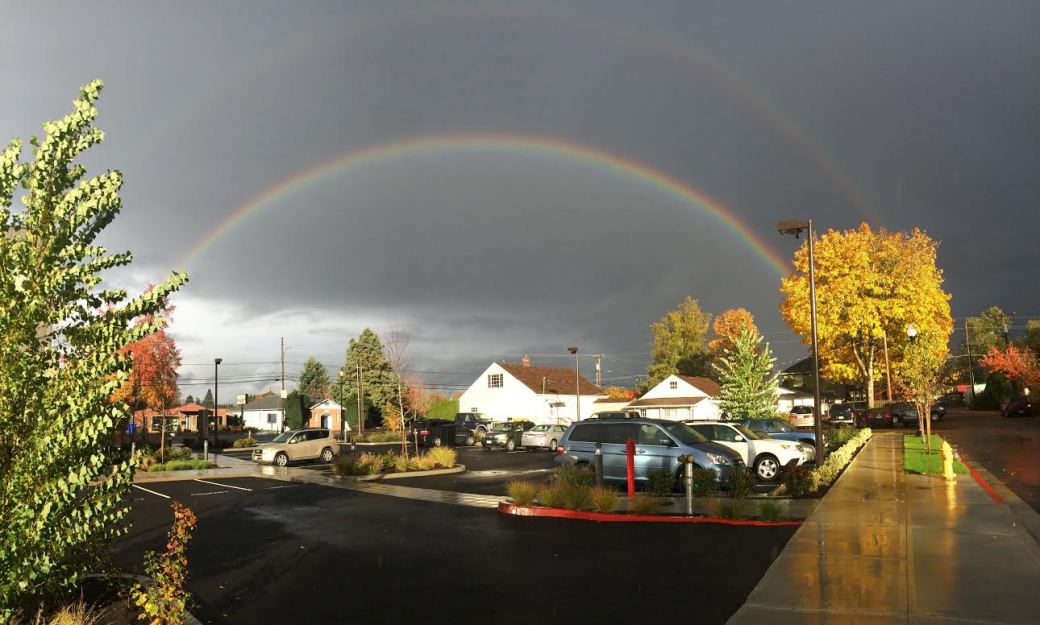
But as the breeze floats in the open window, sending goosebumps up my arms, I see how blind I’ve really been.

Lanterns - EditedbeautyRainbowPhoto

The Day After Ash Wednesday

On the day after Ash Wednesday, I sit with a circle of women who are trying to balance All The Things.

Children.

Aging parents.

Work schedules.

Families in crisis.

Homework duty.

Not one of us at the table could say we had it figured out. And right there at the end, she turns to look at me and asks the question all of us are asking: “What does it look like to spend myself for the Gospel?”

Because the truth is, we’re often one “yes” away from being burned out and worn out and we wonder if we have enough time to give towards things like ending sex trafficking? Our hearts break for stories of abuse and betrayal–but how do we make sure we don’t commit at the expense of our own children and families?

If you can relate to wondering if there’s anything left in your life to give towards justice, head over here to join me for a moment to breathe deep and find hope today. 

IMG_20150502_144521706_HDR

A Prayer to Begin Lent

During (and after) the Advent season, I felt the need to focus on the theme of desire and longing. Now, here we are beginning the season of Lent, and what better word to sum up the experience than desire? Isn’t this much of what Lent is about–to give up that which we desire, in order to more clearly recognize the emptiness of all but Christ? The chance to see how desperately we long for a Savior, since our small earthly attempts at meaningful spiritual discipline are wobbly and incomplete at best?

But maybe Lent could be about more than just restraining a particular desire, as helpful as that may be. This weekend our pastor preached out of Isaiah 58-59, and I couldn’t help but hear the echoes of these words as I sit here today. I’m taping this prayer on my mirror for the 40 days and would invite you to join me, if you’d like.

Lord,

We confess the many ways we have tried to please you, please others, and please ourselves through mere religious activity.

We confess the times we have thwarted or ignored justice out of ignorance, arrogance, or self interest.

We confess the times we’ve signed up or showed up with hearts without generosity or love.

We ask for you to give us new hearts and new desires.

Show us what it means to loose the bonds of wickedness, undo the yoke of oppression, and share our food with the hungry.

Let us be called the repairers of the ruins, the restorers of streets to dwell in. Help us see outside the narrow confines of our self-interest and seek the thriving of our city and community.

Instead of just trying harder, may we be forever ruined by your astounding love, eager to give the same love to others.

Teach us to pour ourselves out for the afflicted, knowing we will be fully satisfied in You.

Amen.

God’s Dimension Coming to Birth Within Ours: On Longing and the Lord’s Prayer

Back in December, as we meditated on the season of Advent, I wrote about longing. Ever since then, I’ve still been asking myself the same question: What does it look like for Christ to be the answer to my longing? What does it mean to bring my desires (or fears) to Him?

Sometimes, I’m surprised by my desires.

Sometimes, I’m proud, even boastful of them.

Sometimes, I’m afraid or confused by conflicting desires.

Sometimes, I’m ashamed to admit them.

When I take a step back and evaluate my every-day, get up and work, push-through-and-do-my-best kind of days, I’m surprised by how central I live to desire. I wake up in the morning with a clear sense of what I immediately want–to stay under the warm, comfortable nest I’ve built for myself until the last possible moment. 🙂 Then, when I’ve finally convinced myself it’s absolutely necessary to leave, I begin this mental dialogue:

What do I want to wear today?

What kind of tea do I want to make?

What do I want for breakfast?

And then the secret, subconscious whispers slip in:

I wish I could be doing ____ today instead of _______.

I wish my life was more/less  ________.

I wish I was one of those people who ________.

I wish this pain, frustration, hurt would end.

The truth is, we were created with desires. With needs. As much as I would like to be self-sufficient, sooner or later I come to the end of myself, a case of unmet desire where I am not in control. Left to ourselves, desire can turn rancid–birthing discontentment, envy, anxiety, self-centeredness. 

What does it mean to live every moment in the presence of Christ within me, living among and as Lord over all these desires?

I love what N.T. Wright says in The Lord and His Prayer:

“The whole point of the Kingdom . . . isn’t about shifting our wants and desires onto a non-physical level, moving away from the earthly to the supposedly “spiritual.” It is about God’s dimension coming to birth within ours…The Kingdom is to come in earth as it is in heaven.”

“The Lord’s Prayer is designed to help us make this change,” writes Jen Pollock Michael in Teach Us to Want,  “a change of priority, not a change of content. This prayer doesn’t pretend that pain and hunger aren’t real.”

Bringing my desires to Christ does not mean rejecting them, but rather releasing them. By recognizing Christ as the authority over all Creation, even my own desires, I allow them to be redeemed and transformed. I allow myself to confess the full force of my desires, humbly admit my needs, make peace with the strong hungers that make me human.

“Brave is the only way to write, and brave is the only way to pray…the untucked prayers— the prayers of our struggle— prepare the way for surrender, even praise.”

Surrendering my desires; this is an act of humility and grace. Through His eyes my priorities are aligned and this changes the way I want. This is not merely self-denial, but soul-transformation. It is freedom rather than obligation. God’s dimension coming to birth within ours.

“I am the bread of life; whoever comes to me shall not hunger, and whoever believes in me shall never thirst” (John 6:35).

I love how Scripture is continually pointing us back to Christ as our tuning fork. “Therefore be imitators of God, as beloved children; and walk in love, just as Christ also loved you and gave Himself up for us,” writes Paul in Ephesians. “Consider him who endured,” encourages the author of Hebrews, “so that you may not grow weary or fainthearted.” “Abide in me,” asks Jesus in John 15, “that my joy may be in you, and that your joy may be full.”

It is ultimately the magnificence of Christ that will eternally capture our hearts. He who is before all things, and in him all things hold together. For by him all things were created, in heaven and on earth, visible and invisible, whether thrones or dominions or rulers or authorities—all things were created through him and for him. He is the radiance of the glory of God and the exact imprint of his nature, and he upholds the universe by the word of his power. All things were made through him, and without him was not any thing made that was made. In him was life, and the life was the light of men.

Thy kingdom come, Thy will be done. May You redeem my desires so they are ultimately satisfied in You.

My New Year’s Resolution: Increasing in Love

In the fifth canto of Dante’s Paradiso, there is one of the most beautiful lines in all of poetry.

Dante has just made an unimaginable journey through the horrors of hell, the strenuous rigors of purgatory, and gets an incredible chance to glimpse the beauty of heaven. As he finally bursts into the outskirts of Divine Virtue, all who are gathered pronounce: chi crescerà li nostri amori:

Behold someone who will increase our love.

When we talk of Heaven, we often mention angels, streets of gold, perfect happiness…but more than anything it is a place of perfect love. The place where Perfect Love dwells. This is ultimate Beauty itself. This will be what we have longed for all our lives.

And the incredible idea he introduces here? Each new member of Heaven does not just take from the already-established love supply. They increase the love of Heaven by their presence.

I realize this is simply human poetry here, but I think he makes such a true and beautiful point. In some small way, the moments we practice loving purely here on earth accomplishes a similar goal. Have you ever noticed how either a negative or positive attitude gains momentum in a group of people? Like a virus, it spreads from one member to another, until someone who thought life was going pretty well suddenly finds himself restless and discontent.

In the same way, I would like to propose the thought that we can become part of a community of people increasing their love in ever-abounding ways. Suddenly, everyone we encounter becomes one “who will increase our love.”

“Growth in love always involves movement beyond the hardened boundaries of isolated self to the selves-in-relationships that make up community..There is no genuine life without love. Self-interests suffocates life. Life implodes when self-interest is at the core.”

“When I am confronted with my frequent failures in love, my instinct has always been to try harder. I recognize the poverty of my love…[yet] nothing changes.

“The reason nothing changes is that the focus is still on me–my failures, my remorse, my discouragement, my efforts. Love requires leaving all of this behind–all my self-preoccupation and all my willful striving…Regardless of the amount of love I tend to have naturally in my heart, it is not enough. The love I need is the love of God as his love becomes mine.” -David Benner, Surrender to Love

What will you encounter this week? A particular difficult assignment? A frustrating coworker or family member? One interrupted plan after another? My goal this year is to see these not as setbacks, but as opportunities to grow in love.

Likewise, the beautiful and enjoyable aspects of my week give me a chance to receive love as well as give. Whether good or bad, all is grace.

“If equal affection cannot be, let the more loving one be me.”

—W. H. Auden

Happy New Year, everyone!!

Advent Longings

During this season of Advent, one particular idea has been weaving throughout my daily thoughts and prayers:

At its core, Advent teaches us what to do with our longings.

The coming of the Messiah was one of the most anticipated, longed-for events in history. Even now, we crave the story of a hero coming to save the world from destruction and evil. Yet in the moment of Christmas, all of that anticipation, that longing, found its conclusion in the tiny body of a frail baby named Jesus.

Tonight, I light the Advent candle and we bow our heads, and I think of all the longings I feel in this moment. How desire is such a universal language of mankind. Desire not just for physical items, even though this seems to have become one of the biggest symbols of Christmas. No, this confusing ache down in my soul is something present throughout the whole year, and simply highlighted in the holiday season. When I look closely, I find

  • the hunger for belonging
  • the longing to be valued and known
  • the cravings for happiness and meaningful experiences
  • the ache of wanting good to be clearly triumphing over every form of evil

This season, I’m meditating on one profound question:

What does it look like for these desires to be fulfilled in the person of Christ? 

Jen Pollock Michael has written a beautiful little book on Christian desire, called Teach Us To Want. Here is what she says:

“We orient our lives not according to our belief systems or worldview, but according to our desires. Every decision, big and small, is value driven, and consciously or subconsciously, we are pursuing what we love and value… To effect real and lasting change, we will have to be oriented toward better desires, even toward grace.

But that plunge into holy desire doesn’t remove us from earthly life; it implicates us, gets us busy in the business of loving and worshiping God in our neighborhoods and churches and cities…In wanting good, we also commit to channeling good— to bless others as liberally and as sacrificially as we have been blessed. After all, in Christ, we are Abraham’s children to whom the good-news promise is given: In you shall all the nations be blessed.

And here is how desire becomes corrupt: wanting derails into selfishness, greed and demanding ingratitude when we’ve failed to recognize and receive the good that God has already given. Trust is at the center of holy desire: trust that God is good and wills good for his people. We trust in asking; we trust in receiving. Holy trust believes that whatever God chooses to give is enough.

Christ has come–this is Christmas. That little baby named Jesus grew up to be a man who would change the course of history. In his coming, God fulfilled his promise and answered the longing of every human heart. Here was one who would begin to put things right–forever. Who would triumph over evil and death.

“Then Jesus declared, ‘I am the bread of life. Whoever comes to me will never go hungry, and whoever believes in me will never be thirsty.'” (John 6:35)

If there was ever a person to entrust our most deepest desires, and to allow to redirect and redeem even our selfish longings, it is Him. The ultimately satisfying Bread of Life. The Word Made Flesh. Emmanuel. The God who has come, and is coming again.

May our longings for more of Him replace our selfish and self-centered desires this season. May our hearts allow his gracious redirection of our many hungers. May we long for His coming and His kingdom during the rest of this Advent season, and in the year to come.


Redemptive Gratitude

” Jesus, knowing that the Father had given all things into his hands, and that he had come from God and was going back to God, rose from supper. He laid aside his outer garments, and taking a towel, tied it around his waist. Then he poured water into a basin and began to wash the disciples’ feet and to wipe them with the towel that was wrapped around him.” John 13:3-5

Identity begets service.

There is an often-quoted (and very true!) saying in Christian circles: “You worship what you love.” Jesus himself said it: “For where your treasure is, there your heart will be also,” and “No man can serve two masters.”

But I would argue that before and amidst love often comes identity. We are self-oriented beings from birth, loving those who love us, and finding happiness in things that go our way. Perhaps we often find love, place the well-being of our hearts, precisely where we find our identity and meaning. From this root, therefore, flows our worship and our service.

Jesus, knowing that the Father had given all things into his hands, and that he had come from God and was going back to God…”

This is the reason John gives for such an astounding act of service. The God who created the ever-expanding universe stoops low with a towel around his waist….and serves.

Why?

He had come from God, and was going back to God.

And so have we.

“For I received from the Lord what I also passed on to you: The Lord Jesus, on the night he was betrayed, took bread, and when he had given thanks, he broke it and said, “This is my body, which is for you; do this in remembrance of me.” In the same way, after supper he took the cup, saying, “This cup is the new covenant in my blood; do this, whenever you drink it, in remembrance of me.” For whenever you eat this bread and drink this cup, you proclaim the Lord’s death until he comes.”

1 Cor. 11:23-26

On this very same night, we get a second glimpse into the mind and mission of Christ. In the same moment Christ knelt as servant, in all the glorious humility of God-made-flesh, he knew one of those he served would betray him. And yet, he gives thanks.

Eucharisteo.

It’s where we get the word Eucharist. Hidden in the midst is the Greek word charis, meaning “grace.” In the very act of giving thanks, Christ declares, “This too is grace.” Then he gives this broken bread out as a symbol of the sacrifice he would make with his broken body. Grace upon grace.

Gratitude begets generosity.

Gratitude begins not in the moment that I mouth the word “thankful,” but in the moment my heart declares “this is grace. This is enough–and more.” It begins in the moments of prying the white-knuckled grip around my life, and receiving it open-handed, a gift flowing both directions. It begins when I start each day with the knowledge that I have come from God, and I am going back to God. And so has everything and everyone around me.

In its deepest essence, gratitude is redemptive. It takes the ordinary, banged-up, imperfect lives we all live, and transform them into beauty. Into grace. Into enough.

So this season, may we be the people who clasp arms together and say honestly, “Sometimes, just God doesn’t feel like enough. But we choose to act on the knowledge that He is.”

May we be the people who, instead of making lists full of all we want this year, walk through our homes astounded at all the stuff we have, and who else out there could we share some with??

May we be the people who live lives that are joy-filled and overflowing, because even though things are so hard and the world is so broken and pain is so real it cannot and should not be ignored, we know where we have come from–and where we are going. And amidst it all is the unfailing grace of Christ. 

Identity and service. Gratitude and generosity. May these be the seeds we plant this season, and watch them grow throughout the new year.

Too Little or Too Much?

“To get to my truest desires I have to be courageous enough to dive into the darkness, through the pain, and find myself on the other side in the bright sun, in the place where my false desires are exposed for what they are: fear, selfishness, comfort at the cost of others.

Rich, miraculous love exists on the other side of pain.

And to get there, I must first walk boldly into the wilderness, where God met Moses in a burning bush, where the people of God wandered for forty years, where Jesus fasted and was tempted. The wilderness is the space between the promises and the promised land. The wilderness is the pain between our shallow desires and our deeper, more real desires. We move from loving our own comfort to loving the things God loves.” -Micah Boyette

It seems I’m always starting my writing with another author’s words. But really, who can say it much better than that?? When it comes to stuff this good, the motto “reduce, reuse, recycle” seems just as applicable.

Seriously, though, these last few weeks have felt like the beginning of a little wilderness for me. I have found myself “on the other side of the bright sun,” keenly aware of my selfishness, short-sightedness, and inability to produce anything of lasting worth on my own.

A news article floats by about child labor in South America. I don’t read it. I pick up a pair of shoes at an outlet store, knowing that “Made in the DRC” probably means the working conditions for whoever made them are atrocious. I buy them anyways, because they’re cheap. Here at home, I have the opportunity to serve someone in my family or church congregation, and I let it pass me by.

When I get exhausted or overwhelmed by justice, it’s usually not that I’ve overcommitted. When I scroll past a church member’s need without seriously considering it, it’s usually not that I have literally nothing to give. It’s laziness. It’s apathy. I’m simply not willing to inconvenience myself to benefit someone I don’t know, or sometimes even those I do. 

“Our fundamental problem is not ignorance of what is right. Our problem is selfishness of heart that causes us to care more about what we want than about what is right.” –Paul David Tripp

I think for me, I find it hard to live a lifestyle of that honors the justice and love of God for two main reasons:

  1. I don’t care enough.
  2. I’m afraid of caring too much.

Now, to be clear, what I’m not trying to say is that each of us should be actively involved in every single kind of justice work that exists in the world. I think part of what I’ve had to grapple with in the past year is simply recognizing my limitations, and entrusting those to God. But when confronted with an issue of injustice, I have the responsibility to truly care. To examine whether this is something I can make a difference in. To ask myself if any of my words or actions are contributing to it, in any way. Honestly, I don’t even think it should wait until I am unavoidably confronted by it. As a student of Jesus, I have the responsibility to be proactive in love and righteousness.

There’s another reason I let those articles pass me by, and neglect researching labor practices in the DRC. Sometimes, I don’t initiate towards justice because I’m afraid of caring too much.

Have you ever felt this way before? A news story features the raping and killing of hundreds of women somewhere in Asia, or the plight of refugees fleeing Syria and you tell yourself, “I just can’t take one more story like this.” So you change the channel, or close your browser, or just plain walk away.

Even just last week, I really struggled with this. If I let myself deeply care about everything, whether or not I feel that I am part of the solution, the weight of it can feel crushing. It’s so much easier just to adopt one “cause” and focus entirely on that–whether it be abortion, trafficking, foster care, poverty, racism, you name it. Then, when I hear about other injustice happening in the world, or even right down my street, I don’t have to care deeply–because it’s not “my cause” and therefore not my problem.

Maybe I’m the only one, but that was the story of my life until this past year. What I’m slowly learning is this: I do have the responsibility to care about all injustice, but if I truly understand the Gospel, caring should not lead me to despair.

The answer to injustice and pain is not me–it is Christ.

The answer to racism and poverty is not my efforts–it is the Gospel.

God is for justice, and the most important thing I can do is bring each area of injustice to Him in prayer. From there, He will guide me into whether or not this is something I can be involved in. Maybe I can’t say yes to every opportunity to serve my church, but I can treat each person I talk to today with dignity and love, and send a note of encouragement to someone in need. Maybe I can’t donate my money to both the refugee crisis center and my local homeless shelter, but I can look honestly at the way I’m spending my money as a steward and give as much as I truly can. Maybe I really can’t do anything about the exploitation of women and children halfway across the globe–but I can faithfully remember them in prayer.

Ultimately, the answer to injustice isn’t just doing more or giving more. The answer is Christ. When we take the burden off of ourselves and spend more time worshipping the God who holds all things in his hands, we participate in the work of redemption and remember what we were truly created for. Becoming more like Jesus Christ–this, above all, is righteousness.

If justice is going to happen in this world–if it’s going to happen in you–it will start in the little things. (Luke 16:10) Start small. Value others. Focus more on your responsibilities, and less on your rights.

When justice becomes a duty, it will weigh you down. When justice is the place where you are closest to God, giving your life away becomes your greatest delight.

…God does not call us to create our own goodness out of thin air, as if justice were something we could accomplish with a checklist and a bit of hard work.

Instead, God calls us to listen. The source of all goodness will surely have something to say about injustice. Then he calls us to obey. This is what it means to give our lives away…on behalf of others and for the glory of God.”

–Ken Wytsma
Starting Simply.

“As we behold the glory of Jesus, we increasingly participate in his image, transformed into his resemblance and character.” -Tony Reinke

I just want to know how to live my one life well.

This summer Ben and I returned from what many would have called a “mission trip.” But it was our arrival back through the US Customs Border that we were really on a mission.

We had arrived in Amsterdam like thirsty sponges, ready to learn and soak up what we could of another culture, another viewpoint, another world. We had just begun asking ourselves those big questions–what is our life really about? What are our priorities? Now, after three months, we had found a few answers–and even more questions.

We wanted to learn what it meant to be ethical consumers. How we could leverage our time and resources for justice, right where we lived. What it meant to be generous and self-sacrificing, yet live simply.

I talked in my last post about how I’m learning that sometimes, this means starting small. It means humility and discipline. It means having the same grace for myself as I give out to others.

You want to know what else I’m (humbly) learning?

It means being a worshipper.

It’s finally starting to sink in for me. In every area of my life, in everything I want to be or do, all the questions I have, it all comes down to to the gospel. It all comes down to Jesus.

“The more you know [Christ], the better you will trust him; the more you trust him, the better you will love him; the more you love him, the better you will serve him.” –Newton

Or, as Jason Fileta (founder of one of my favorite Portland non-profits, Micah Challenge,), puts it: “The response is not to live as a Justice Pharisee, but we need to respond as an act of worship. We need to rediscover worship as what we do with our daily lives.” –Jason Fileta

Ultimately, living my life well means learning from the one who lived life perfectly. Instead of trying to do more, be more, give more– I just need more of Jesus. I just need to be captivated more by His beauty.

What does this mean for me, practically? It means more prayer. More thanksgiving. More meditating on the heart of Christ. More going back, every single day, to the message of the Gospel.

And hopefully, more of that will mean less time wasted with my own Justice Agenda, trying to fix the world on my own.

IMG_20150502_144521706_HDR